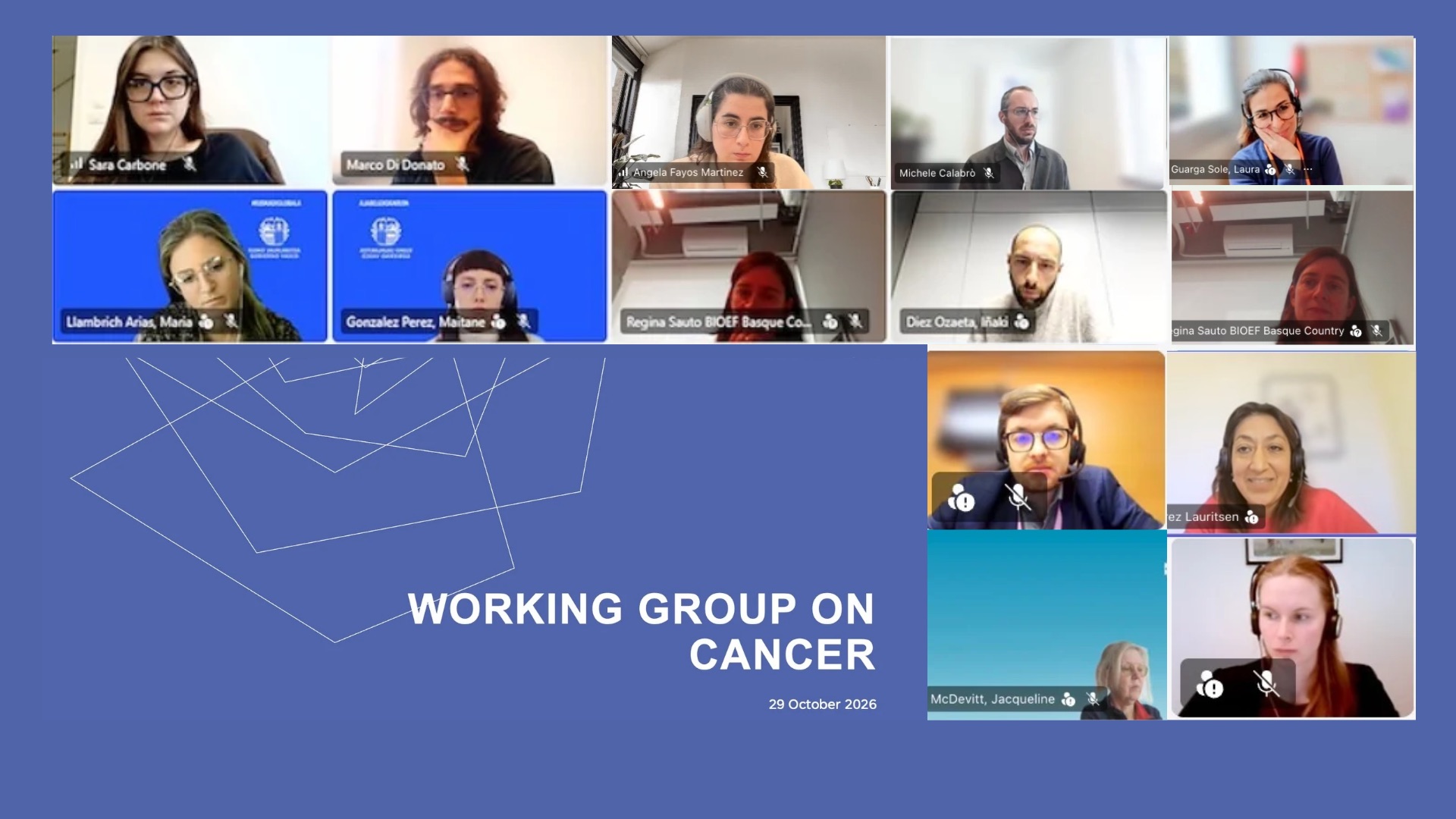
On 29 October 2026, EUREGHA’s Internal Working Group on Cancer brought together regional representatives and experts for an exchange on regional practices in Comprehensive Cancer Centres (CCCs), rural–urban gaps in cancer care, and opportunities for collaboration through European cancer initiatives.
The meeting focused on how regional health systems can strengthen governance, improve coordination across healthcare institutions, and promote equitable access to high-quality cancer care.
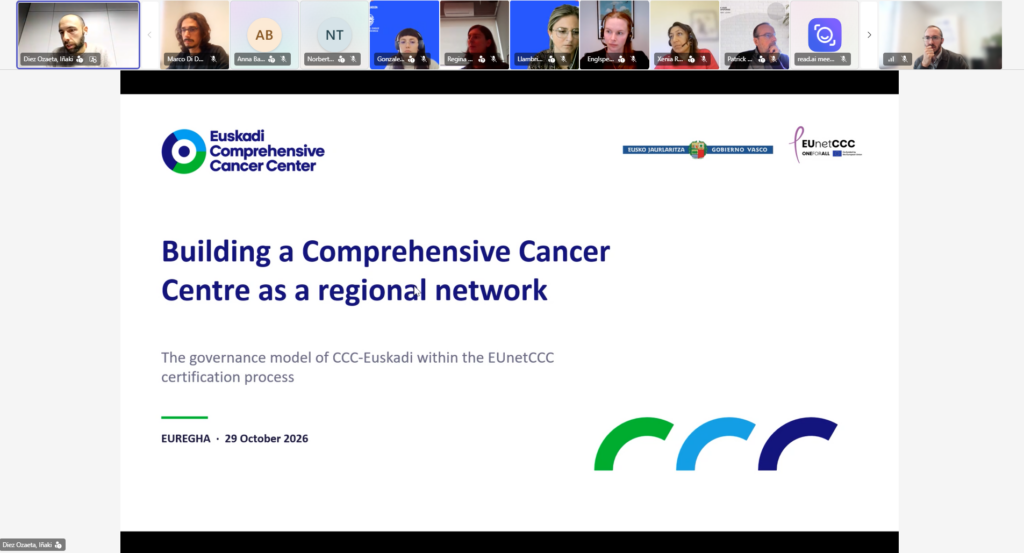
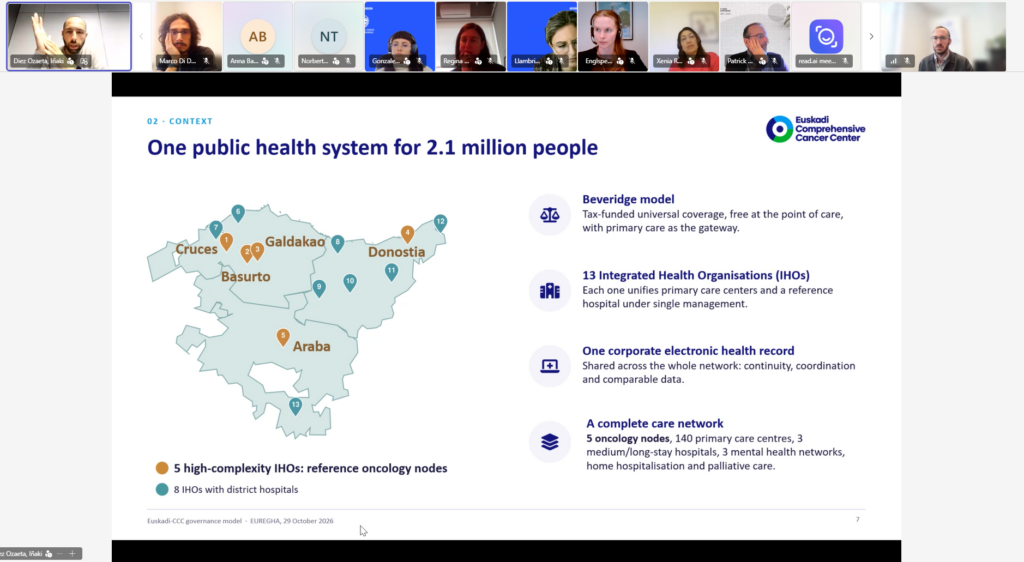
Basque Country (Iñaki Diez Ozaeta) presented the governance model of the Euskadi Comprehensive Cancer Centre, highlighting how a regional network can bring together healthcare, research, innovation, prevention and patient support within a coordinated framework. The presentation showcased the importance of clear governance structures, integrated care pathways and collaboration across healthcare organisations to ensure consistent standards of care throughout the territory.
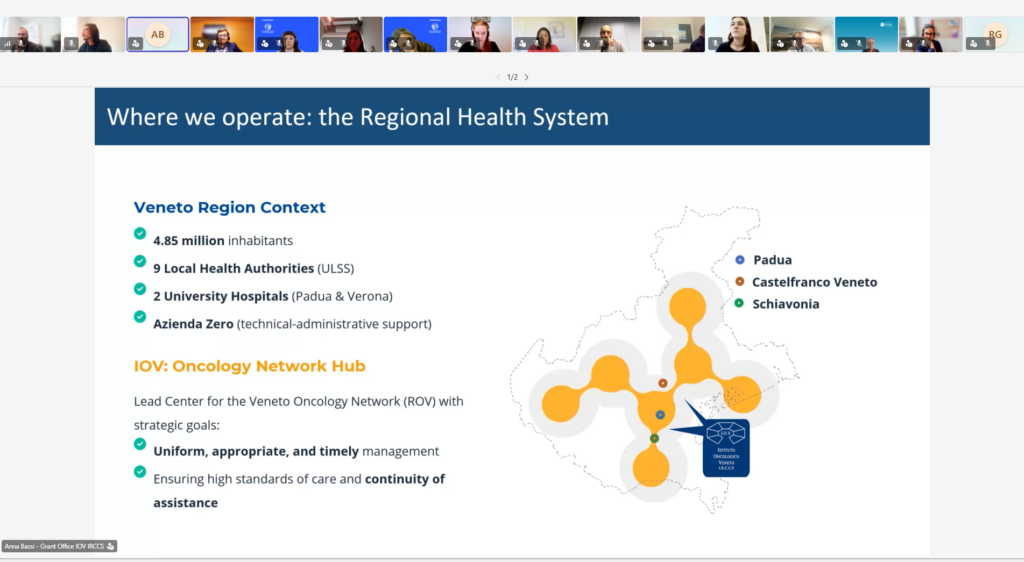
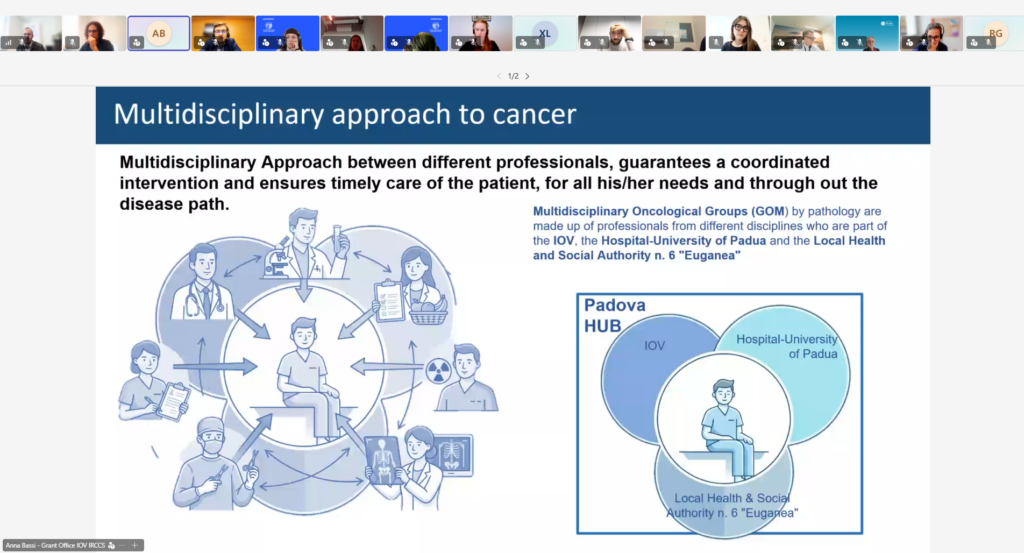
Veneto Institute of Oncology (Anna Bassi) shared the Institute’s experience as a Comprehensive Cancer Centre within the European EUnetCCC framework. The presentation highlighted the role of multidisciplinary care, scientific research and regional partnerships in strengthening oncology services. Particular attention was given to the integration of clinical practice and research, collaboration across healthcare institutions, and the development of coordinated care networks to improve continuity and quality of care.
European Cancer Organisation (Norbert Couespel) contributed to the discussion on rural–urban gaps in cancer care, focusing on the importance of addressing territorial inequalities and ensuring equitable access to cancer services. The discussion underlined the need to strengthen connections between healthcare providers and regional and local systems so that access to specialised expertise and quality care does not depend on where patients live.
EUREGHA Secretariat (Marco Di Donato) provided updates on ongoing cancer-related projects and opportunities for regional engagement. The session covered ECHoS II – Cancer Mission Hubs, which aims to strengthen connections between National Cancer Mission Hubs and regional and local cancer ecosystems, as well as forthcoming European funding opportunities, including Horizon Europe’s Cancer Mission calls and relevant EU4Health topics. The Secretariat also presented opportunities for members to exchange interests and explore potential collaborations around upcoming calls.
The meeting reaffirmed the importance of strong regional governance, integrated healthcare networks and cooperation across territorial levels in building more equitable cancer care systems. By sharing regional experiences and identifying opportunities for joint action, EUREGHA’s Working Group on Cancer continues to support regional and local health authorities in translating European cancer policy priorities into practical solutions that respond to the needs of patients and communities.
About the Working Group on Cancer:
The Working Group on Cancer serves as a platform where EUREGHA members – regional representatives and experts – exchange knowledge, best practices, and expertise on cancer care and policy. The group aims to bridge the gap between policy and practice, ensuring that regional and local authorities play a crucial role in shaping cancer prevention, treatment, and long-term care strategies.