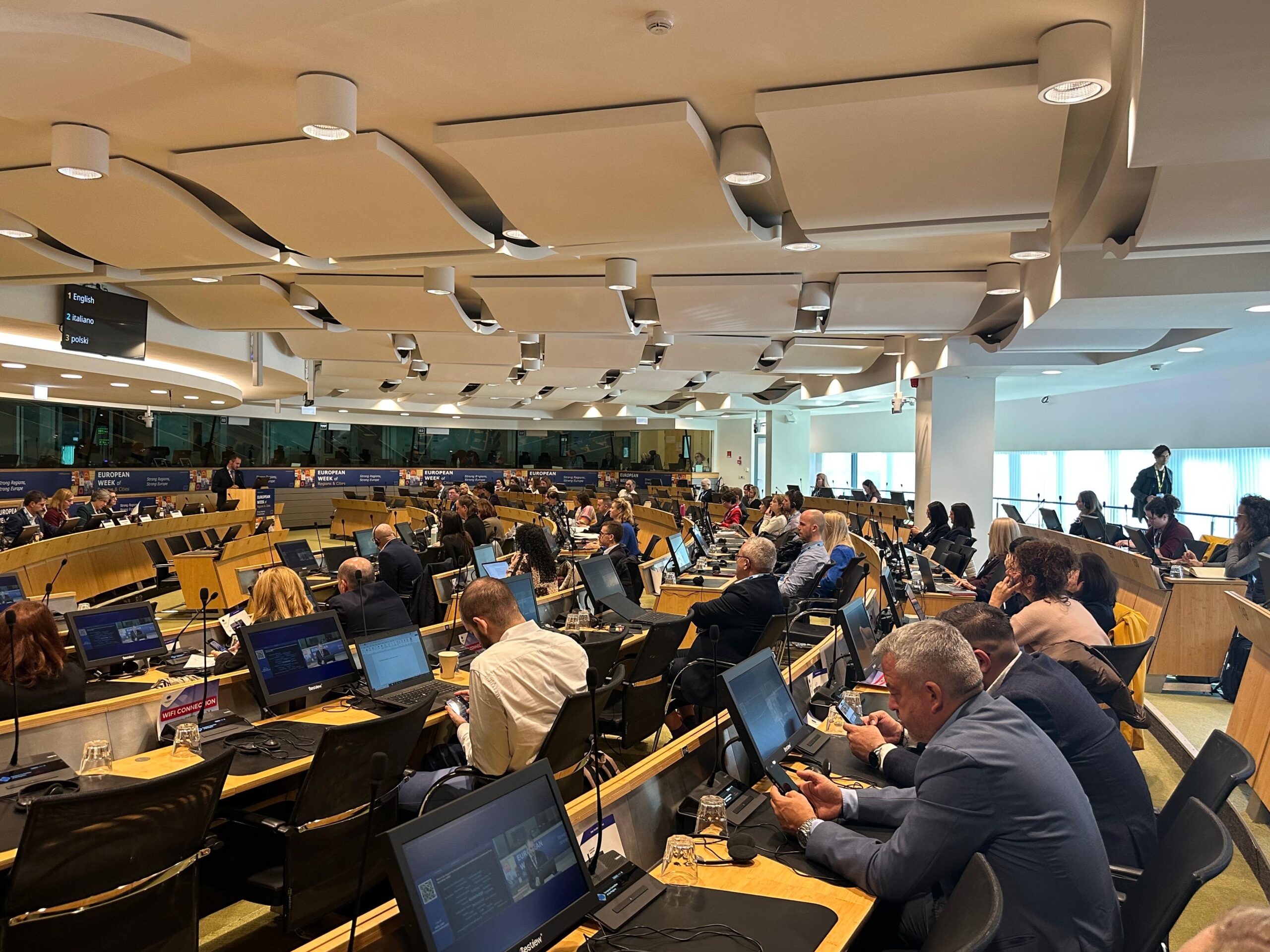
On 2 July, the CoR’s Interregional Group on Health and Wellbeing met at the European Committee of the Regions to explore how regions are advancing the use of Artificial Intelligence (AI) in healthcare. The session focused on real-time data use, governance, and how regional initiatives can align with the future European Health Data Space (EHDS).
Chair Birgitta Sacrédeus opened the discussion by calling for a balanced approach to AI: “open yet critical”. She stressed that while AI has enormous potential to improve diagnostics, care delivery, and hospital efficiency, ethical, governance, and data-sharing challenges must be addressed collectively.
Ulrick Skipper Espelund presented Denmark’s SOFUS project, which uses explainable AI to detect early signs of sepsis and organ failure. “Early treatment is key for sepsis. We hope our AI can help healthcare professionals find these patients earlier,” he explained. To achieve real-time clinical use, the team built a dedicated data transit centre using the FHIR standard, overcoming significant IT fragmentation. Preliminary results show SOFUS can accurately identify high-risk patients, with potential benefits for hospital resource planning and patient outcomes. Look at the explanatory video of the SOFUS application here.
Prof. Josep Redón highlighted the Valencian Community’s leadership in AI governance and the opportunities and challenges of the EHDS. “The advantages AI can give us for healthcare are incredible, but we need to address data fragmentation and privacy concerns,” he noted. Valencia has created federated AI governance structures, regional data lakes compatible with the EHDS, and practical AI applications in radiology, chronic patient follow-up, and emergency room forecasting. He emphasised the need for clear ethical and legal frameworks and for integrating AI training into medical education.
In her closing remarks, Sacrédeus underlined three key messages: regions play a central role in preparing for the EHDS, AI’s benefits depend on responsible deployment, and continued collaboration among regions, policymakers, healthcare professionals, and industry is essential to ensure AI delivers tangible benefits for public health.
Find the minutes and the speakers’ slides here below.