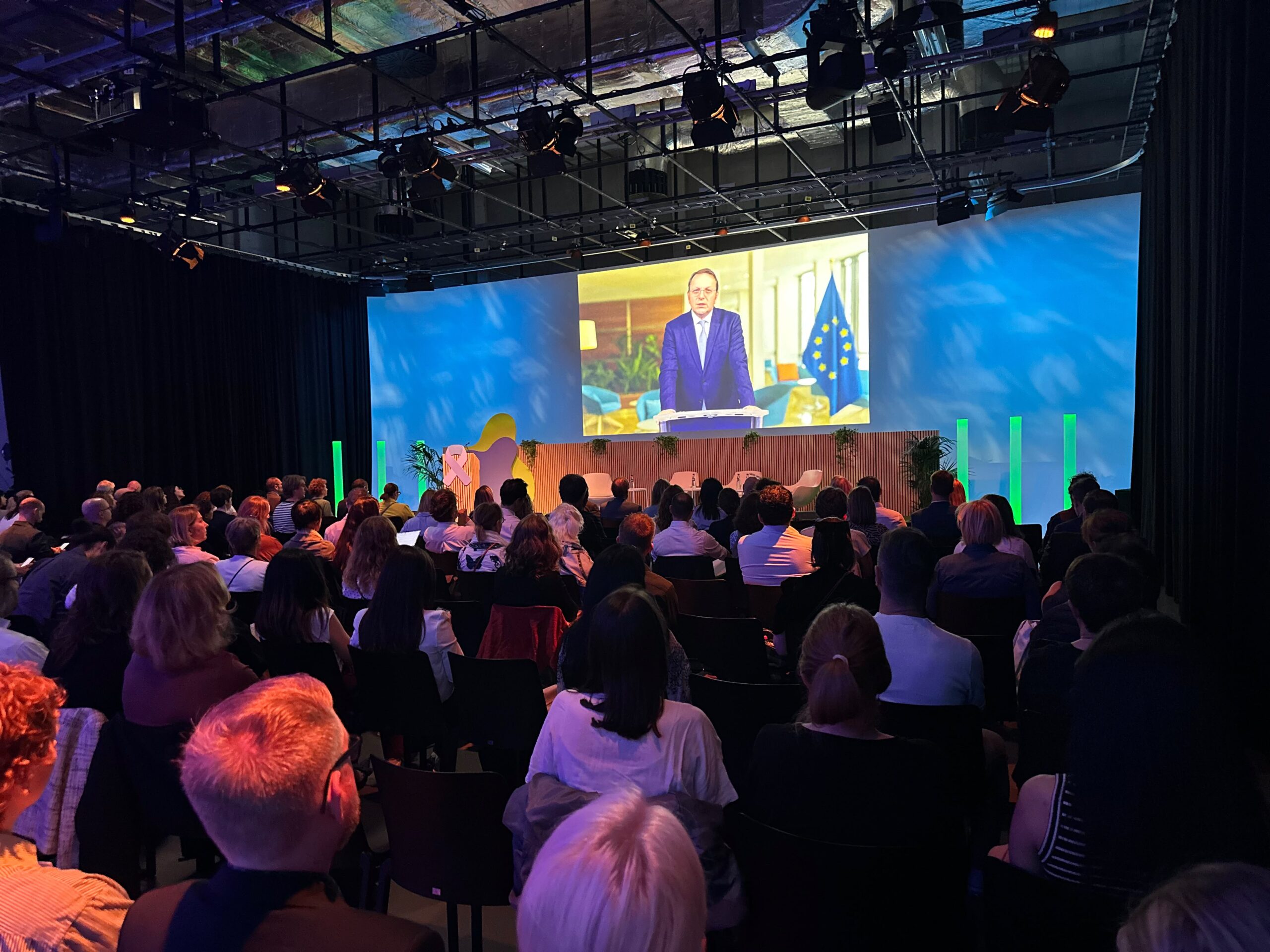

From 29 September to 1 October, EUREGHA joined stakeholders from across Europe in Brussels for the EU Cancer Mission Showcase, marking five years of the EU Cancer Mission and looking ahead to its 2030 objectives.
Under the theme “Stronger Through Connection”, the three-day event brought together researchers, policymakers, healthcare professionals, patient organisations, innovators and other stakeholders to reflect on progress in cancer prevention, early detection, diagnosis and treatment, survivorship and patient engagement.
For EUREGHA, the Showcase was an opportunity not only to follow the latest developments across the Cancer Mission, but also to strengthen connections with partners and highlight the importance of bringing the regional and local dimension into European cancer policy.
Three days, one shared focus: connecting research, innovation and people
The programme covered a wide range of topics, reflecting the different dimensions of the Cancer Mission.
The first day focused strongly on the role of data and research, with sessions exploring how to build a coherent cancer data ecosystem, improve access to and sharing of cancer data, develop better models for cancer research and care, and use data-driven tools for precision oncology. The programme also explored the development of National Cancer Data Nodes and the role of cancer imaging data and AI.
The second day shifted towards prevention, early detection and quality of life, with discussions on prevention strategies, innovative approaches to early detection, survivorship and patient engagement.
The final day turned to diagnosis, treatment and clinical research, including personalised and affordable care, patient benefits from innovation in personalised oncology, and the role of clinical research in delivering impact through the Cancer Mission.
Across these different themes, one element remained constant: the need to connect research and innovation with the people, health systems and communities that ultimately need to benefit from them.
Connecting the Cancer Mission with regional realities
This was particularly relevant to EUREGHA’s participation in the Showcase.
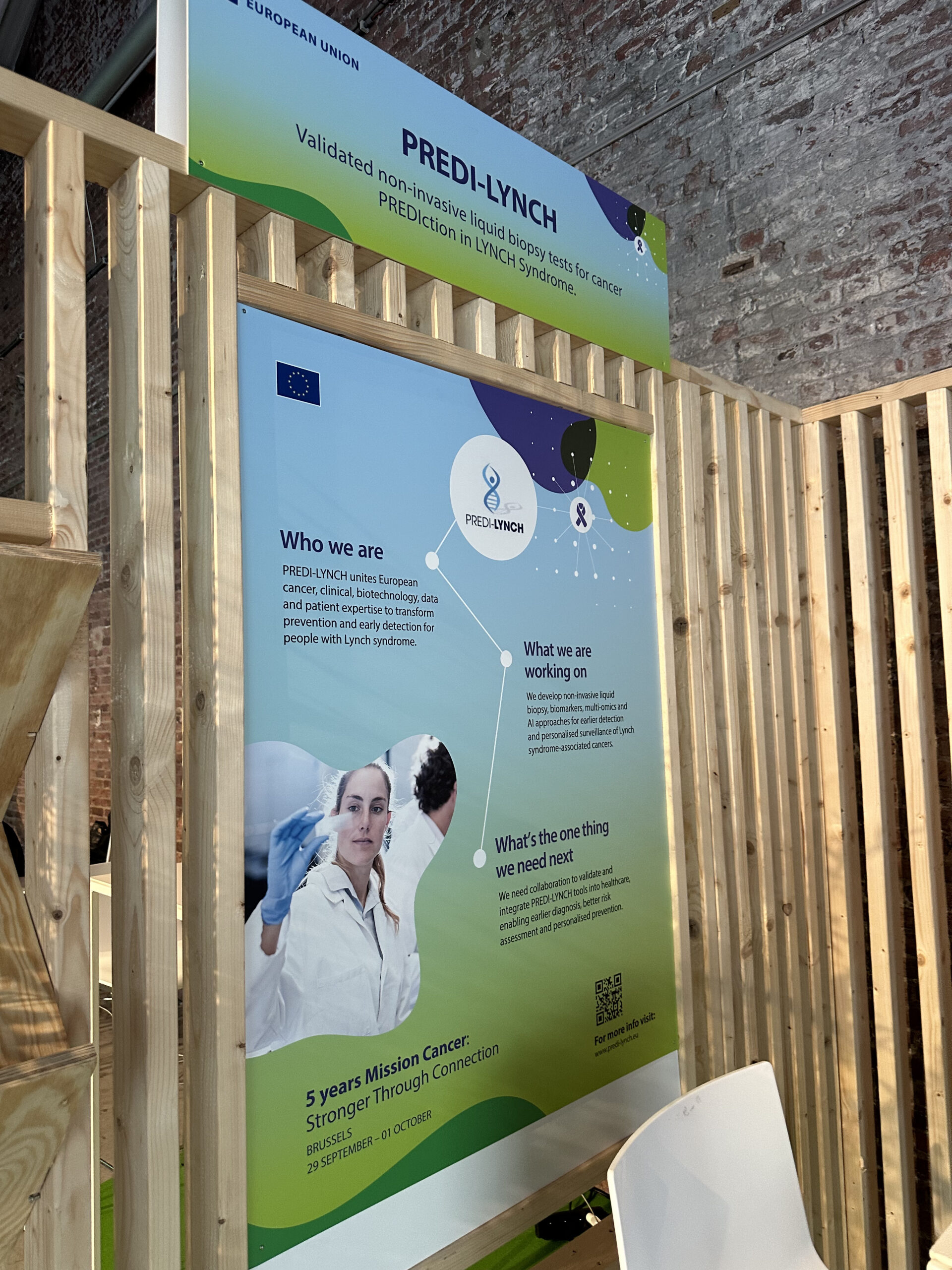
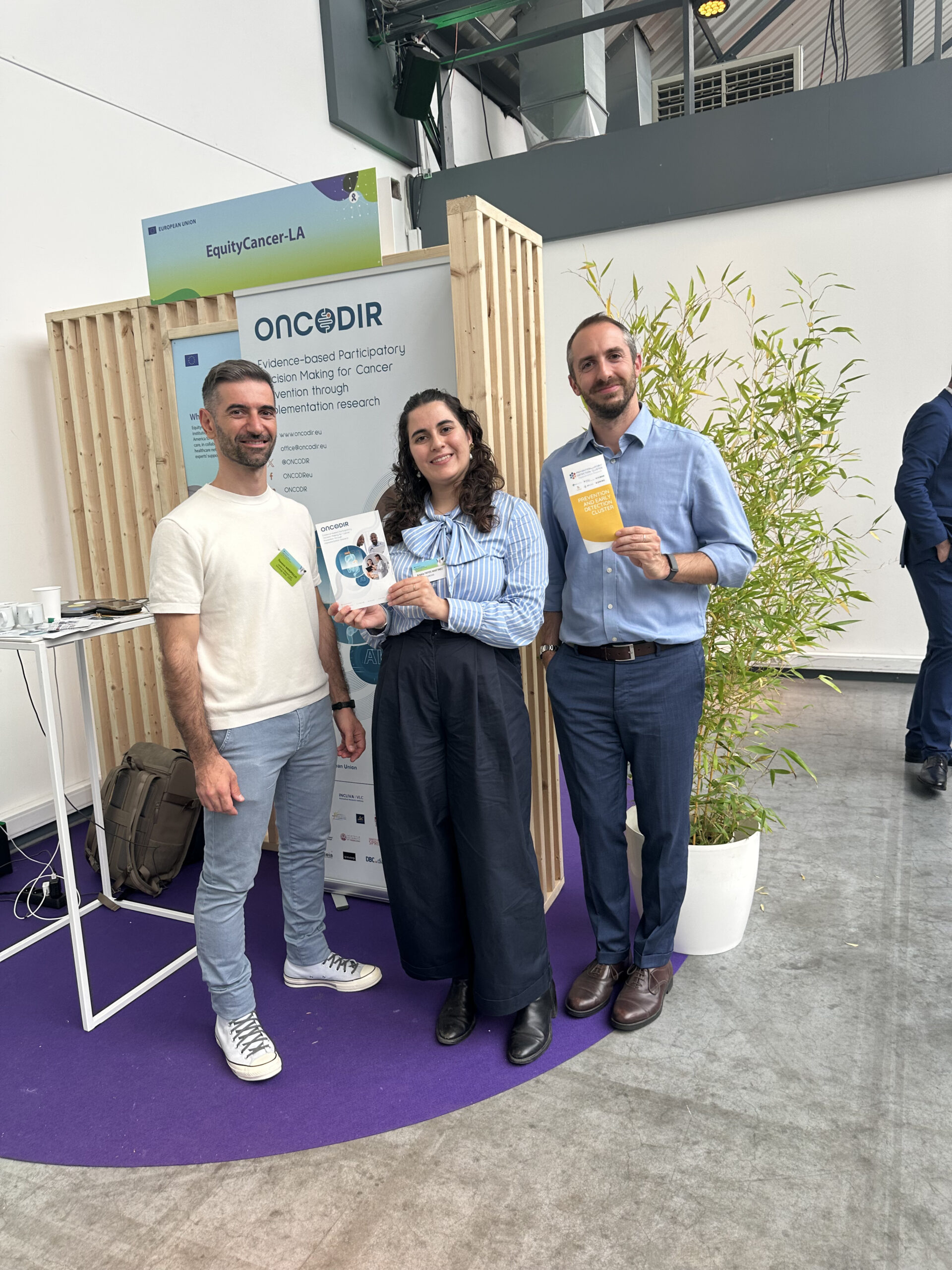
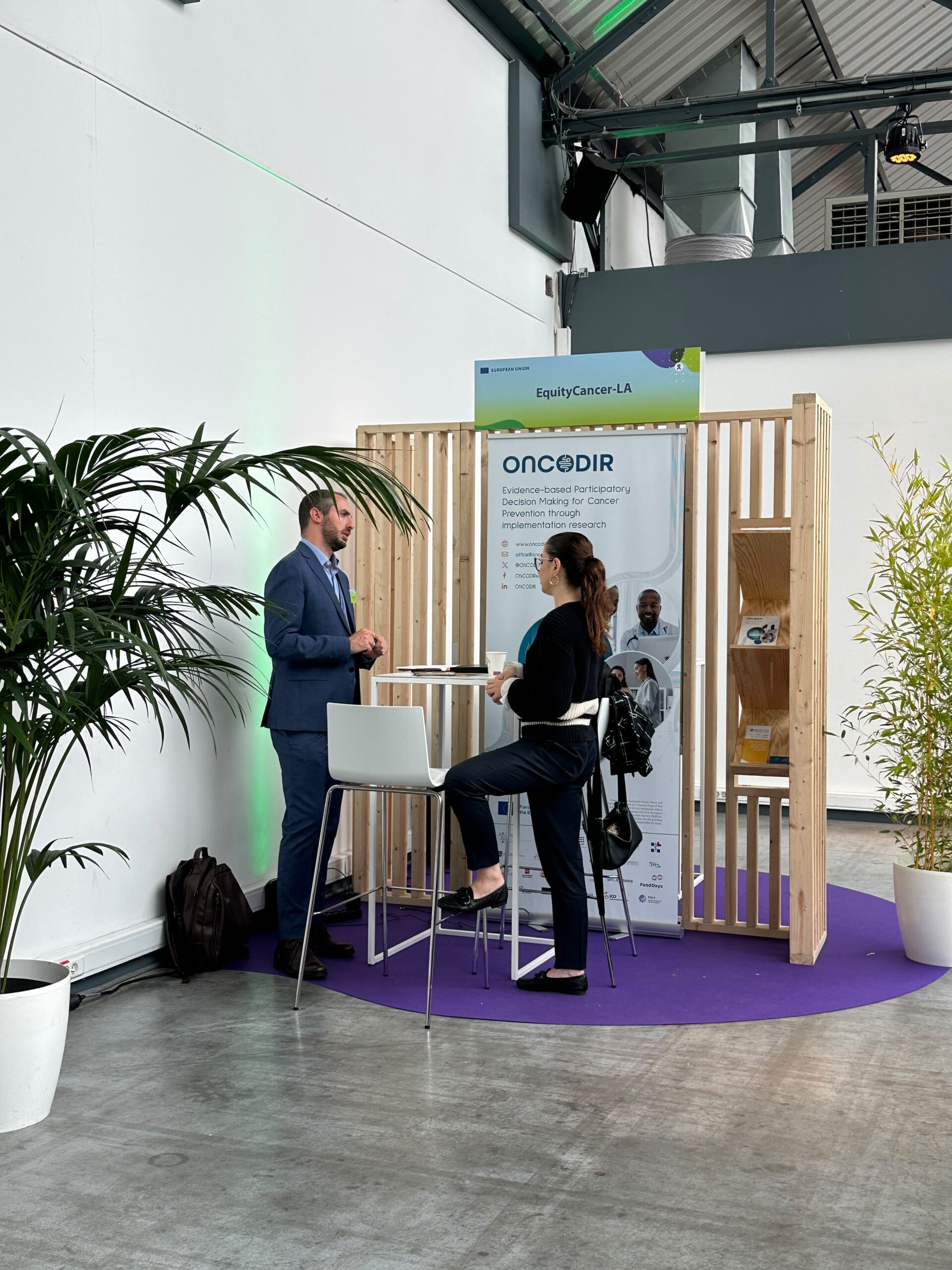
EUREGHA took part throughout the three-day programme, connecting with colleagues from across the European cancer community and showcasing the work of projects including DynamiCity, ECHoS, PREDI-LYNCH, YARN and ONCODIR.
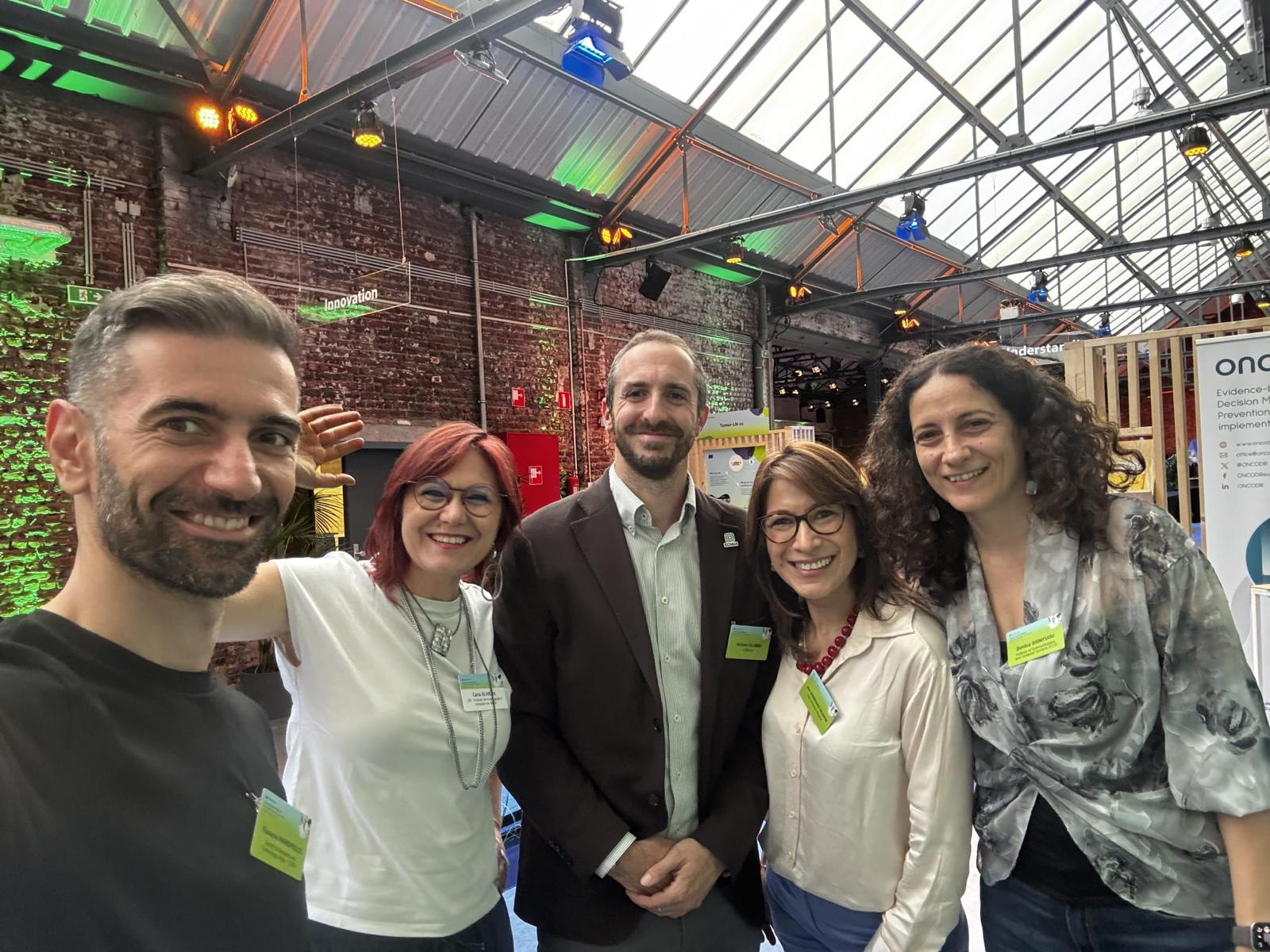
The Showcase also provided an opportunity to reconnect with partners from ECHoS and exchange on how the Cancer Mission can better connect European priorities with regional and local health authorities. The EUREGHA perspective was particularly relevant in a programme increasingly focused on moving from research and innovation towards implementation.
The importance of this connection was also reflected in sessions dedicated to data and innovation. Discussions on cancer data ecosystems, National Cancer Data Nodes, digital tools and AI highlighted the potential of new technologies and research approaches, while also raising the question of how these developments can be translated into health systems and services across Europe.
The event further offered valuable opportunities to meet colleagues from across the wider cancer ecosystem, including partners from the EARLYSCAN cluster, and to strengthen connections with initiatives working on prevention, research and innovation.
From research to real-world solutions: the role of co-creation
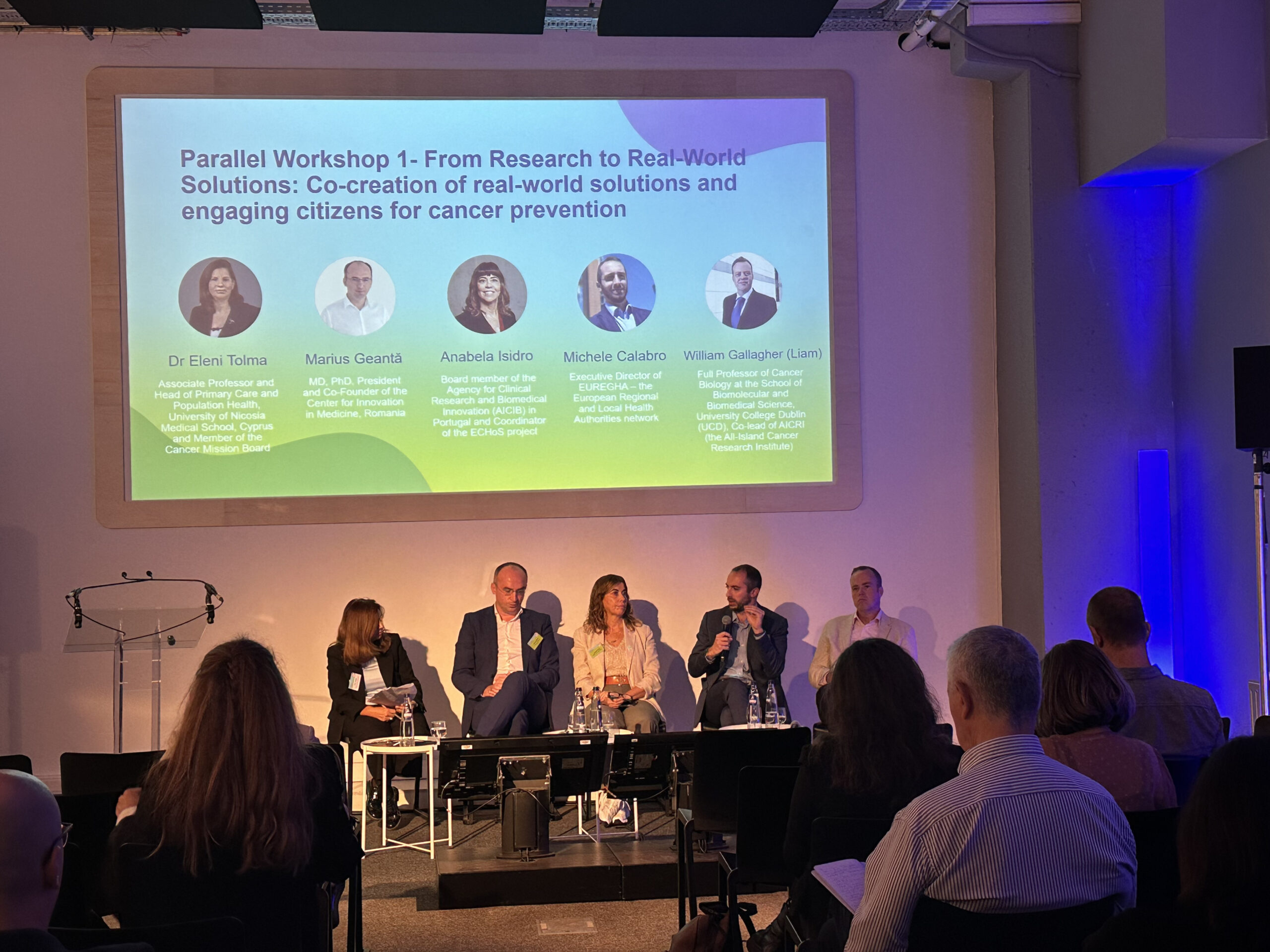
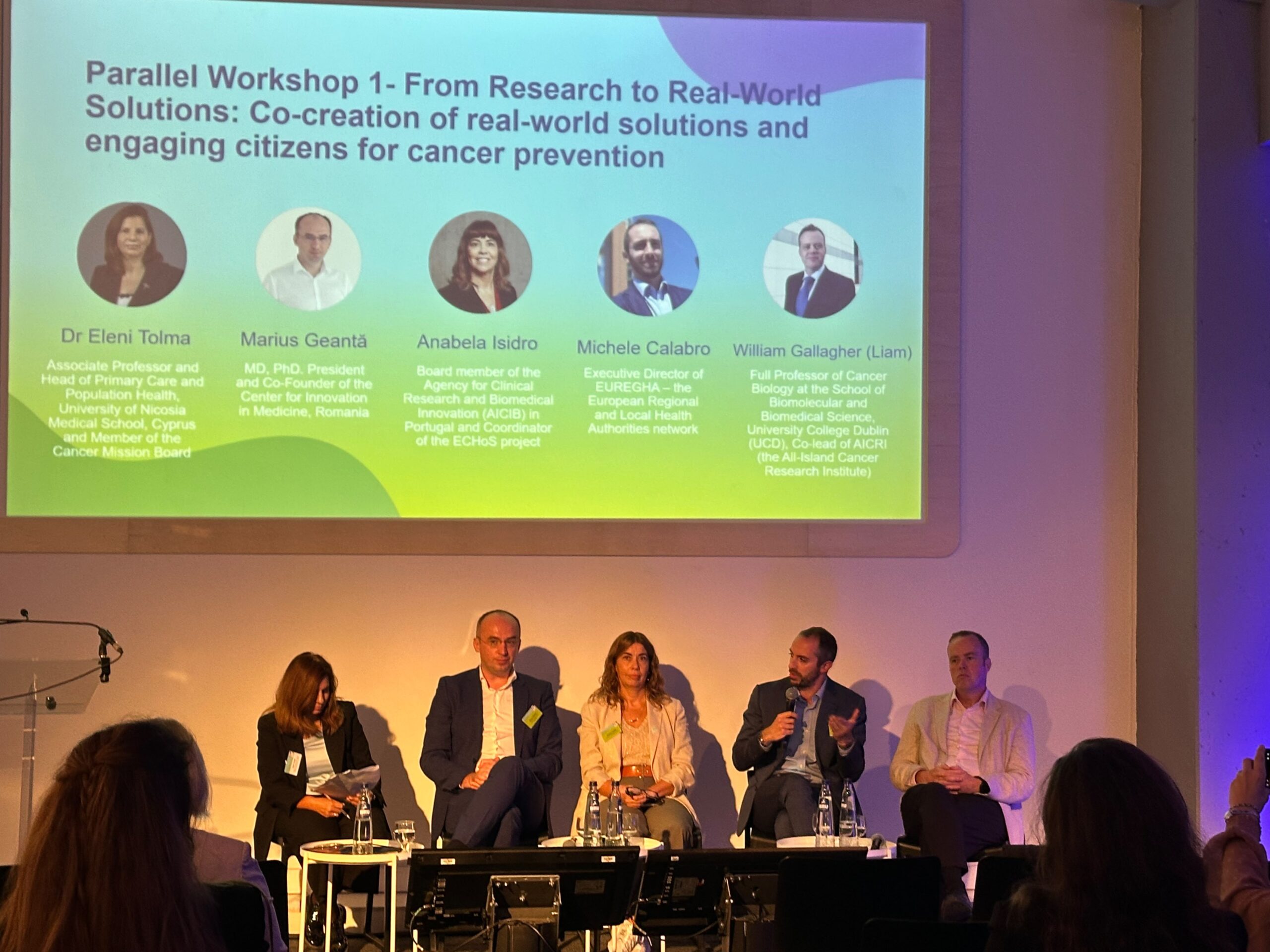
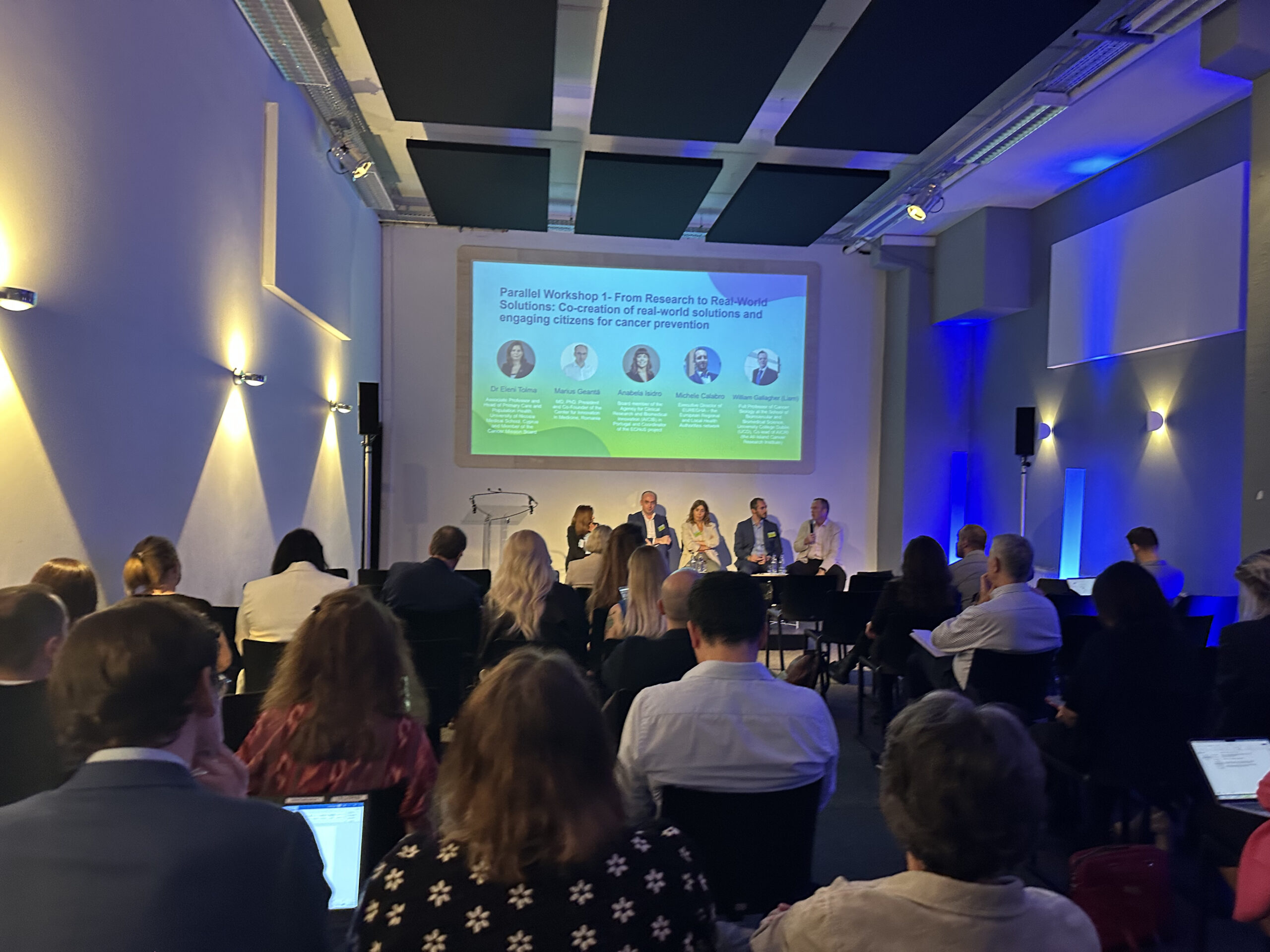
One of the key moments for EUREGHA came on 30 September, when EUREGHA Executive Director Michele Calabrò joined the workshop “From Research to Real-World Solutions: Co-creation of real-world solutions and engaging citizens for cancer prevention.”
The session brought together perspectives from research, innovation, public engagement and regional health authorities, including Anabela Isidro, Coordinator of the ECHoS project, and William Gallagher, Co-lead of the All-Island Cancer Research Institute, alongside Michele Calabrò.
The discussion explored how research and innovation can move beyond the development of knowledge to create solutions that respond to people’s needs. At its heart was the importance of meaningful patient and citizen engagement.
As highlighted during the discussion: the role of regional and local health authorities in translating European cancer priorities into action, and the role of patients and young people is shaping those solutions.
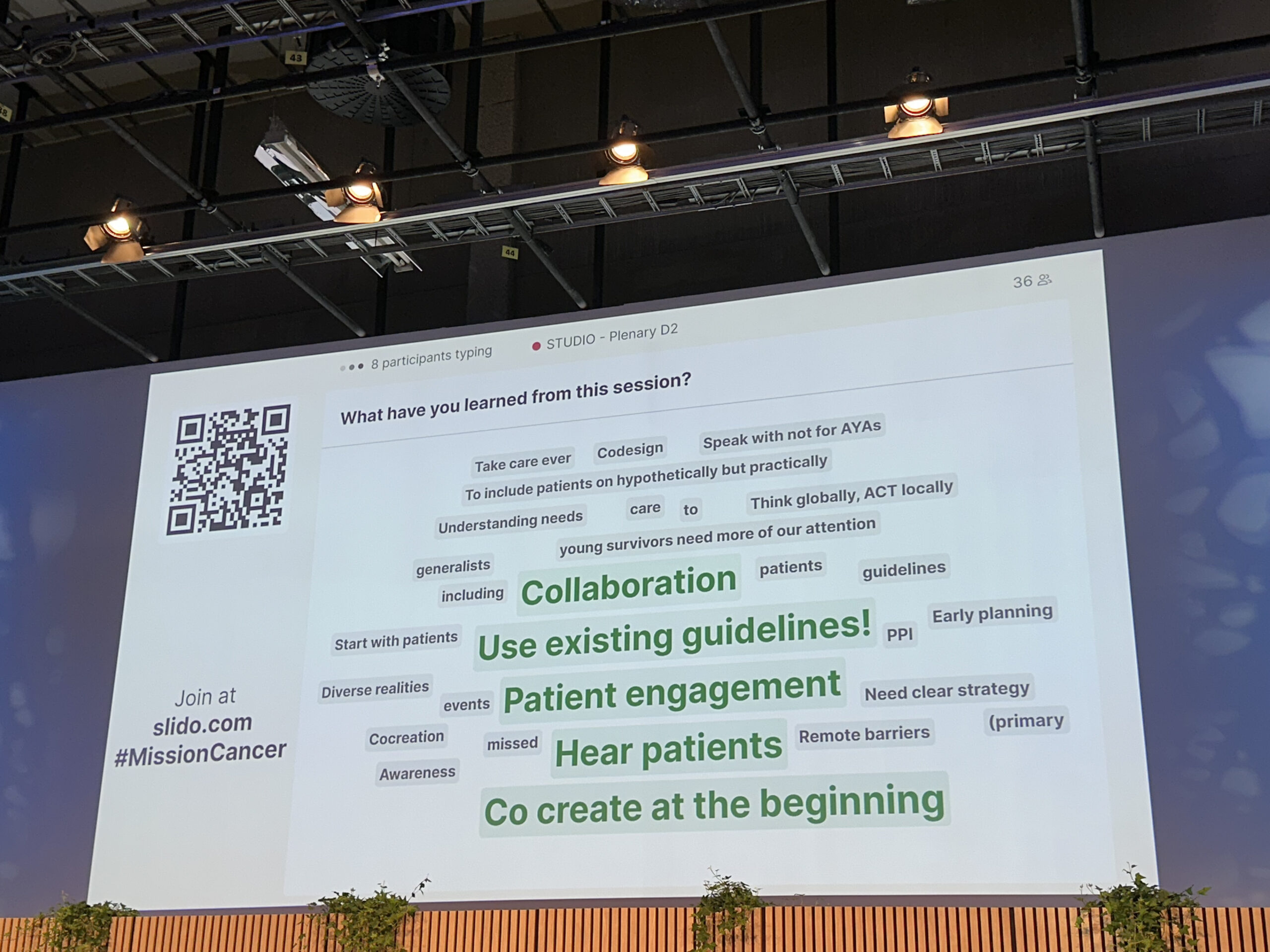
Meaningful engagement means involving patients and citizens from the beginning of a process and recognising their lived experience as an essential contribution to the design and implementation of solutions.
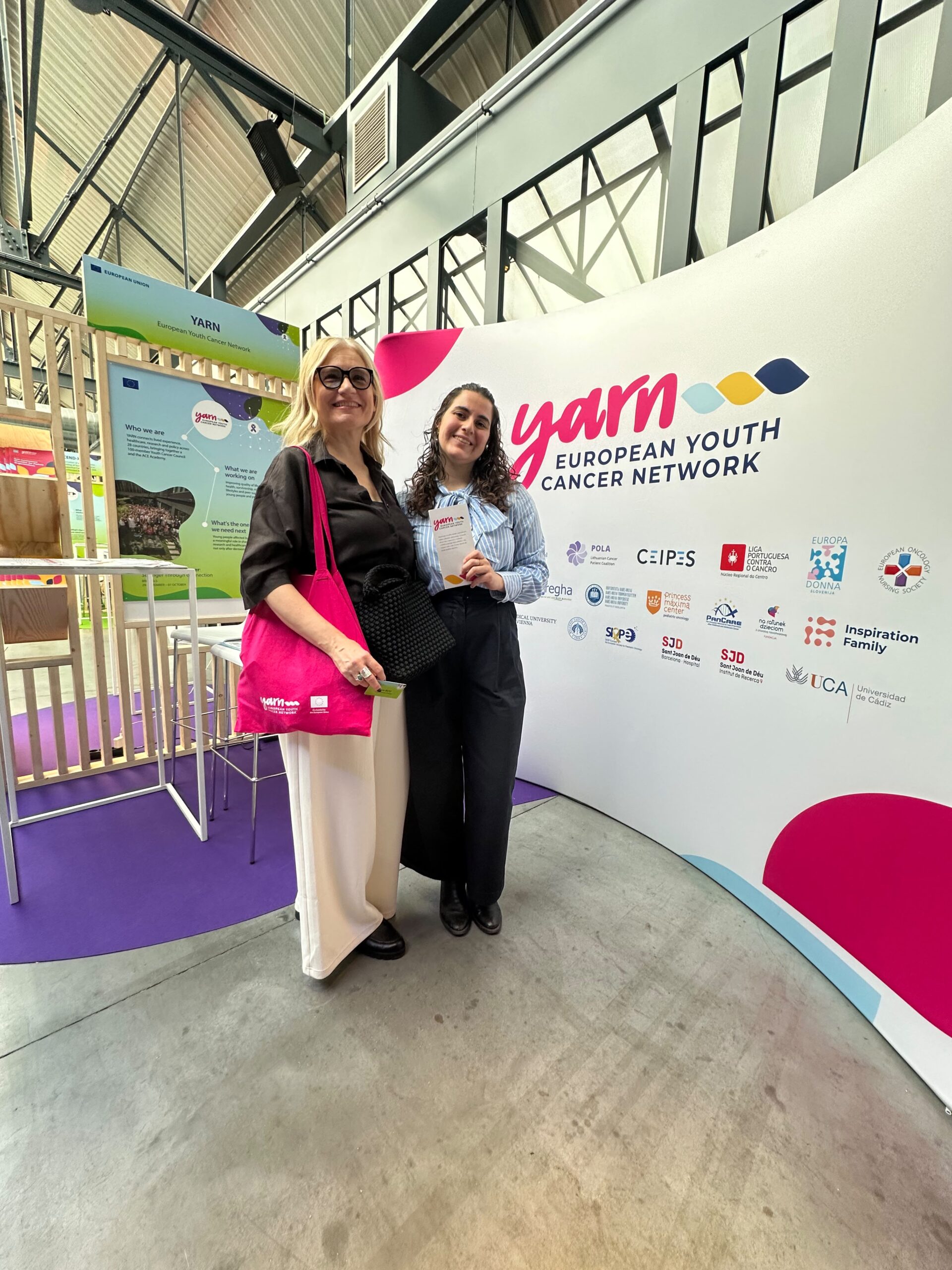
This principle is also central to YARN – Youth Cancer Network, which brought the perspective of adolescents and young adults to the Showcase.
Beyond treatment: putting young people at the centre of cancer care
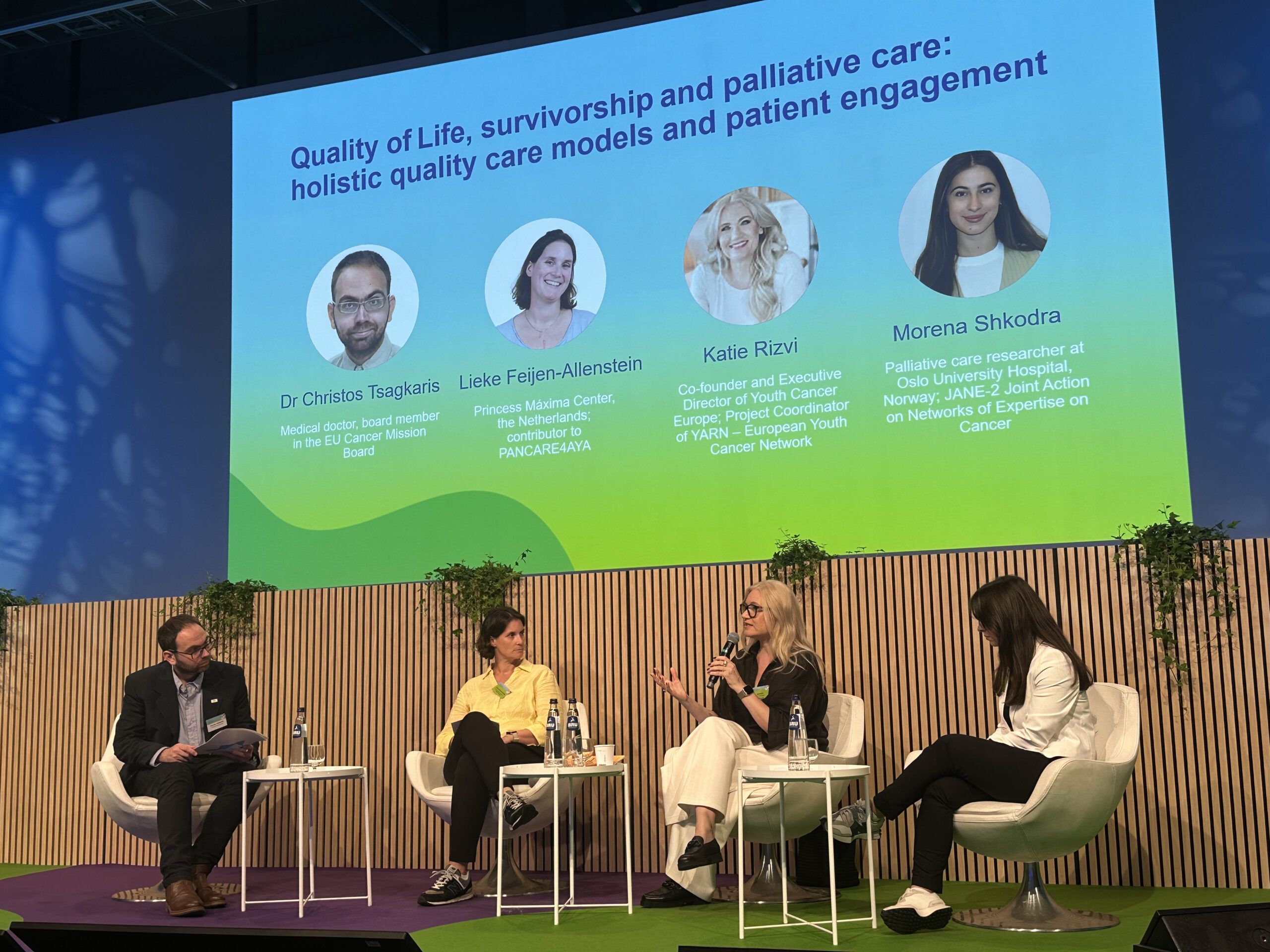
Patient engagement was also at the heart of the session “Quality of Life, Survivorship and Palliative Care: Holistic Quality Care Models and Patient Engagement”, where Katie Rizvi, Co-founder and Executive Director of Youth Cancer Europe and Project Coordinator of YARN, represented the perspective of adolescents and young adults affected by cancer.
The session explored how cancer care can better address the needs of adolescents and young adults beyond treatment alone. An EU-level exploratory study presented during the session examined AYA cancer care across the EU, Norway and Iceland, highlighting three important dimensions: continuity of care, support for everyday life, and voice and choice. It also pointed to uneven age-appropriate follow-up and transitions between services, inconsistent access to psychological, practical and family support, and the need for more meaningful involvement of young people in service development.
Through YARN, young people with lived experience are actively involved in shaping discussions around cancer care and survivorship. Their participation reflects a broader principle emerging throughout the Showcase: patients should not simply be consulted about solutions, but should have a meaningful role in shaping them.
Katie’s contribution therefore complemented Michele Calabrò’s intervention in the co-creation workshop, bringing together two closely connected perspectives: “Having patients in the room is not enough. We need to give them a rol
This connection between territorial implementation and lived experience is particularly important for developing cancer care pathways that are more responsive to the realities of people and communities.
When arts and culture become part of cancer engagement
The Showcase also offered an inspiring example of how arts and culture can create new spaces for dialogue around cancer.
During the co-creation session, Professor William Gallagher presented Behind Walls, a public engagement initiative involving cancer researchers, artists, patient advocates, educators and community organisations in the co-creation of public artworks and storytelling around cancer.
The initiative illustrates how co-creation can extend beyond traditional research and healthcare settings, using creative practice to open conversations around cancer research, prevention and lived experience.
It also offers a valuable connection with EUREGHA’s wider work on Culture and Health, where arts and cultural participation are explored as ways of supporting health, wellbeing and social connection.
From European priorities to local impact
The EU Cancer Mission Showcase also demonstrated how much is happening across Europe to advance cancer prevention, research, innovation and care.
From data sharing and AI to prevention and early detection, personalised treatment and survivorship, the programme highlighted the diversity of approaches being developed across the Cancer Mission. Sessions on topics such as cancer data ecosystems, precision oncology, innovative early detection and quality of life showed how research and innovation are opening new possibilities across the cancer pathway.
Yet the Showcase also reinforced that innovation alone is not enough. Turning European research and policy priorities into meaningful improvements requires connections between different levels of governance, sectors and communities.
For EUREGHA, this means ensuring that regional and local health authorities remain part of the conversation — not only as implementers of European priorities, but as key actors in understanding local needs, connecting stakeholders and helping translate innovation into practice.
Stronger through connection
Across the three days, one message came through clearly: progress in cancer prevention and care depends on connection.
Connection between research and practice.
Between European priorities and regional realities.
Between innovation and implementation.
Between health systems and communities.
And between professionals, patients and citizens.
The EU Cancer Mission Showcase provided an opportunity to reflect on five years of the Mission while looking ahead to the work still needed to achieve its ambitions for 2030.
For EUREGHA, continuing to strengthen these connections — and ensuring that the regional and local perspective remains an integral part of the Cancer Mission — will be essential to turning European priorities into meaningful action for people and communities across Europe.